
Thermal energy networks for multi-family housing deliver centralized heating and cooling to multiple residential units through a shared infrastructure loop. Designed to replace individual HVAC systems, they reduce operating costs, cut carbon emissions, and give developers and property managers a scalable platform for long-term energy efficiency.
Published: April 10, 2026 | Author: ProProfitBuild Team | Renewable Energy Consultants
What Are Thermal Energy Networks?
A thermal energy network – sometimes called a district energy system – is a centralized infrastructure that distributes hot or chilled water (or refrigerant) from a shared plant to multiple buildings or units through insulated underground pipes. The plant generates thermal energy using heat pumps, geothermal wells, boilers, or a combination of sources. Each connected building draws from this shared loop for space heating, cooling, and domestic hot water.
In the context of multi-family housing, the model replaces dozens or hundreds of individual mechanical systems with one engineered, managed platform. The result: predictable energy costs, reduced maintenance overhead, and a measurable reduction in carbon output per unit.
The term "district energy" traditionally referred to large municipal or campus-scale systems. Today, the same architecture is being designed at the neighborhood and building-cluster level, making it viable for apartment developers, mixed-use projects, and residential communities of 50 units or more.
Why Multi-Family Housing Is the Ideal Application
Multi-family buildings have distinct thermal load profiles that align well with centralized systems. Units share walls, floors, and ceilings, which reduces the aggregate peak load compared to an equivalent number of detached homes. This thermal sharing effect means the central plant can be sized more conservatively while still meeting demand.
The economic argument is equally strong. A single large heat pump or geothermal installation is significantly more cost-effective per unit of capacity than many smaller residential units. Shared infrastructure spreads capital costs across all units in the development, and operational management falls to one qualified team rather than individual tenants or landlords.
From a developer's perspective, integrating a thermal energy network at the design stage rather than retrofitting later delivers the greatest value. Early integration allows the mechanical engineer and energy consultant to:
- Right-size the central plant based on the full building load profile
- Route distribution piping through dedicated utility corridors
- Coordinate with the electrical design for heat pump power requirements
- Position the plant room to minimize pipe run lengths and heat loss
For city planners and municipalities reviewing development proposals, residential thermal energy systems also advance climate and sustainability goals. They provide a clear pathway to decarbonize heating across entire neighborhoods, especially when designed around geothermal or waste heat recovery.
Core Design Principles for Residential Thermal Systems
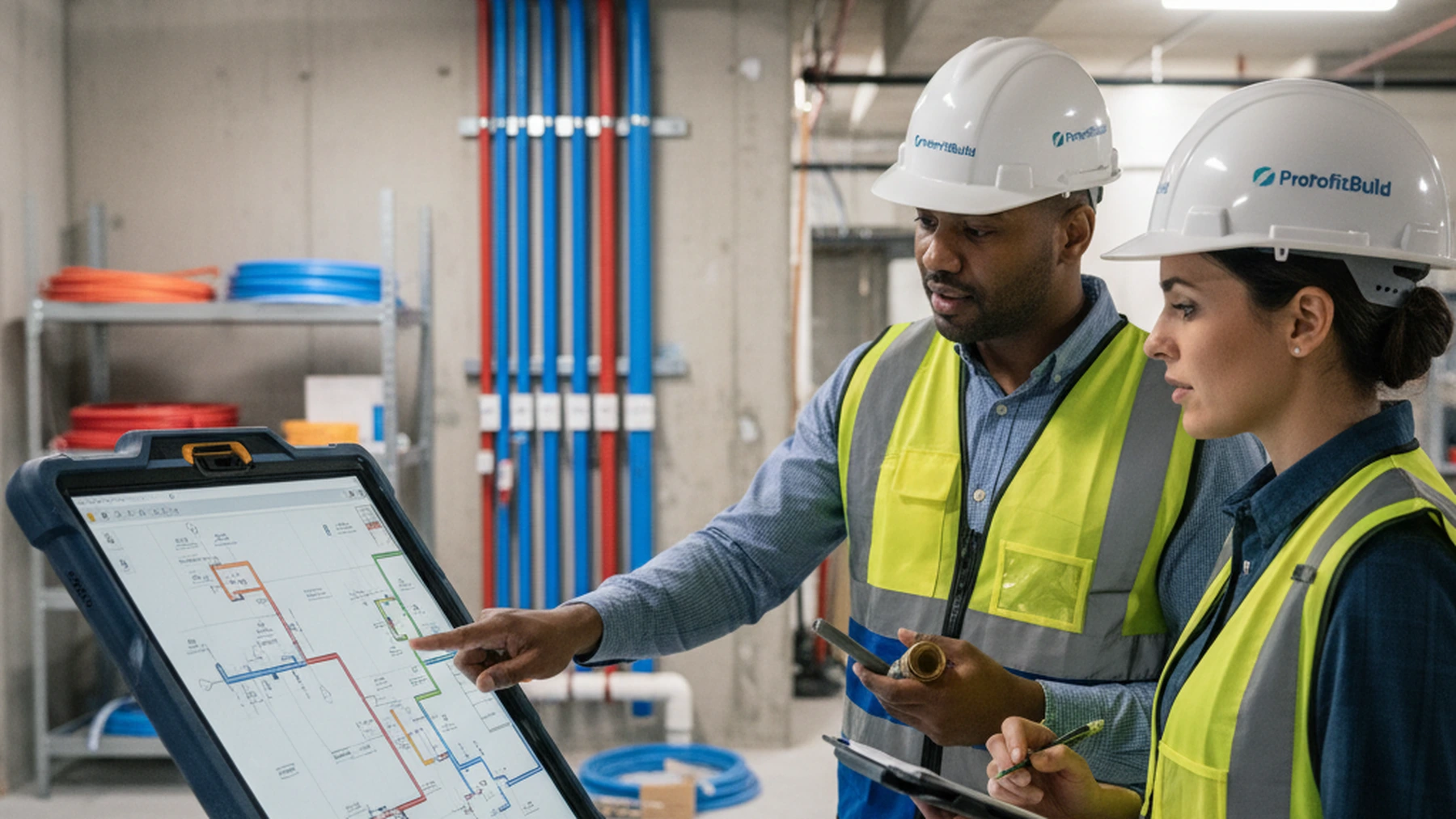
A well-designed thermal energy network for apartments and multi-family housing is built on four engineering principles:
1. Load Analysis Before Equipment Selection
Every project starts with a detailed thermal load analysis. This involves calculating the peak heating and cooling demand for each unit and the aggregate demand for the full development. The load profile determines plant capacity, pipe sizing, and the number and type of heat transfer units at each connection point. Skipping this step or using rule-of-thumb estimates leads to undersized or oversized plants, both costly errors.
2. Loop Temperature Design
The operating temperature of the distribution loop is one of the most consequential design decisions. Low-temperature loops (around 45 degrees F to 65 degrees F for cooling, 120 degrees F to 140 degrees F for heating) are well-suited to heat pump systems and reduce thermal losses in the piping. Higher-temperature systems may be required where legacy equipment is integrated or where domestic hot water demands are high. The design must account for the full range of seasonal variation and occupant behavior.
3. Redundancy and Resilience
A central plant that serves 200 residential units cannot afford extended downtime. Redundant heat pump capacity, backup boiler provisions, and manual bypass valves are standard components of a resilient thermal energy network. Redundancy levels are designed based on the criticality of the load and the recovery time acceptable to residents and property managers.
4. Metering and Sub-Metering
Each unit in a multi-family thermal energy network should have its own heat meter. Sub-metering allows individual billing based on actual consumption, which is both fair to tenants and an effective behavioral driver for energy conservation. Modern metering platforms transmit data in real time, giving facility managers visibility into system performance and early warning of anomalies.
District Energy Apartment Buildings: Infrastructure and Integration
The physical infrastructure of a district energy apartment system has three primary layers:
The Central Plant
This is where thermal energy is generated or extracted. In geothermal thermal energy networks, vertical or horizontal ground loops extract heat from the earth in winter and reject heat back to the ground in summer. In systems designed around air-source heat pumps, the plant typically sits on the roof or in a dedicated equipment yard. Hybrid systems combine geothermal with supplemental boilers or chillers for peak shaving.
The Distribution Network
Insulated underground pipes carry hot or chilled water from the plant to each building or unit connection. The distribution network is designed as either a two-pipe or four-pipe system. A two-pipe system delivers either heating or cooling at any given time, requiring a seasonal switchover. A four-pipe system delivers both simultaneously, which is preferred in climates with overlapping heating and cooling demands or in buildings with mixed residential and commercial uses.
The In-Building Interface
At each building or unit, a heat exchanger or energy transfer station connects the shared distribution loop to the internal mechanical system. This interface maintains hydraulic separation between the central loop and the in-building systems, protecting both from pressure or contamination issues. Fan coil units, radiant floor systems, or air handling units then distribute conditioned air or radiant heat to living spaces.
Integration with existing building systems is one of the most complex aspects of retrofitting thermal energy networks into existing apartment developments. Mechanical engineers must account for the existing distribution piping, terminal units, and control systems. In new construction, the design team has far greater flexibility to specify systems that are thermally optimized from the ground up.
Implementation Best Practices and Common Pitfalls
Successful implementation of a thermal energy network in a multi-family housing development requires coordination across disciplines and a disciplined project management process. The following practices consistently separate high-performing projects from those that struggle post-commissioning:
Engage an Energy Consultant Early
The energy consultant should be involved during feasibility and schematic design, not called in during construction documents. Early involvement allows the consultant to shape the plant configuration, distribution strategy, and metering architecture before design decisions become costly to reverse.
Commission Aggressively
Thermal energy networks are complex systems. A rigorous commissioning process, including functional testing of the central plant, distribution loop pressure testing, and individual unit interface verification, is the single most effective way to prevent post-occupancy performance issues. Budget for commissioning at the start of the project, not as an afterthought.
Design for Current and Future Loads
Multi-family developments often phase construction. The thermal energy network should be designed with future capacity in mind, with plant room space reserved for additional equipment and distribution piping sized to accommodate future extensions. Designing for the current phase only and retrofitting later is consistently more expensive than designing ahead.
Train the Operations Team
A thermal energy network is only as effective as the team managing it. Property managers and facilities staff need training on system monitoring, alarm response, and routine maintenance. Remote monitoring platforms help, but they do not replace operational knowledge.
Common pitfalls include: under-sizing the plant based on optimistic load estimates, failing to account for domestic hot water peak demand, installing meters without a data management platform, and neglecting seasonal performance verification in the first year of operation.
ROI, Policy Tailwinds, and the Business Case
The financial case for thermal energy networks in multi-family housing has grown stronger in recent years. Several converging factors are at work:
Operating Cost Reduction
Centralized systems operating at scale are consistently more efficient than distributed residential equipment. Shared maintenance contracts, bulk energy procurement, and optimized system controls contribute to lower per-unit operating costs over time.
Green Building Incentives
Federal, state, and local incentive programs increasingly support district energy and geothermal installations in residential developments. These programs can offset a meaningful portion of the capital cost of the central plant and distribution infrastructure. Energy consultants with deep policy knowledge are positioned to identify and capture these incentives during project development.
Asset Value and Marketability
Buildings with low-carbon, low-cost energy infrastructure command premium valuations in markets where sustainability credentials are a differentiator. Institutional investors, ESG-focused funds, and city housing authorities increasingly prioritize buildings with verified energy performance over those with projected performance.
Regulatory Direction
Cities across the United States are tightening building performance standards, carbon caps, and all-electric mandates. Developers who integrate thermal energy networks now are positioned ahead of compliance requirements that are likely to become more stringent over the next decade.
How ProProfitBuild Guides Projects from Concept to Commissioning
ProProfitBuild specializes in renewable energy consulting and project management for developers, housing authorities, and city planners integrating thermal energy networks into multi-family and mixed-use developments. The ProProfitBuild approach covers the full project lifecycle: feasibility analysis, system design coordination, contractor procurement, construction oversight, commissioning support, and post-occupancy performance monitoring.
The team brings hands-on experience with geothermal thermal energy networks, heat pump district systems, and hybrid configurations across a range of development scales. For developers navigating a first thermal energy network project, this expertise reduces risk, accelerates the design process, and ensures that the system delivers on its performance and financial projections.
Whether you are evaluating feasibility for a new multi-family development or planning to retrofit an existing apartment community, the ProProfitBuild team can scope the project, identify incentives, and build a business case grounded in real system data.
Contact ProProfitBuild to discuss your project, or book a consultation to get started with a feasibility assessment.
For more on the full scope of our thermal energy network services and renewable energy project management capabilities, visit the ProProfitBuild services pages.
Frequently Asked Questions
What is a thermal energy network in the context of multi-family housing?
A thermal energy network is a shared heating and cooling infrastructure that serves multiple residential units from a central plant. Hot or chilled water circulates through insulated underground pipes to each unit connection, replacing individual HVAC systems. The model is designed to reduce per-unit energy costs, lower carbon emissions, and simplify maintenance for property owners.
How does a district energy system differ from a conventional apartment HVAC system?
A conventional apartment HVAC system gives each unit its own heating and cooling equipment. A district energy system centralizes that equipment in a single plant and distributes thermal energy through a shared loop. The district model is typically more energy-efficient at scale, reduces mechanical room requirements in each unit, and provides centralized monitoring and control.
What size of multi-family development is suitable for a thermal energy network?
Thermal energy networks become cost-effective at around 50 units or more, though the threshold varies by climate, building type, and available incentives. Larger developments of 150 units or more tend to achieve the strongest economics because capital costs are distributed across more units and the central plant operates more efficiently at higher utilization rates.
Can an existing apartment building be retrofitted with a thermal energy network?
Yes, though retrofits are more complex and costly than new construction integration. The feasibility depends on the existing mechanical systems, available space for plant equipment, and the condition of in-building distribution piping. A thermal energy consultant should assess the existing infrastructure before scoping a retrofit to identify the most cost-effective integration pathway.
What role does geothermal energy play in residential thermal energy systems?
Geothermal energy is one of the most efficient heat sources for a thermal energy network central plant. Ground-source heat pumps extract heat from the earth in winter and reject heat to the ground in summer, operating at higher efficiency levels than air-source systems across most climates. For multi-family developments with available land or parking structures, geothermal thermal energy networks represent the highest-performance configuration available.