
Geothermal vs Traditional HVAC: Discover the Best Choice
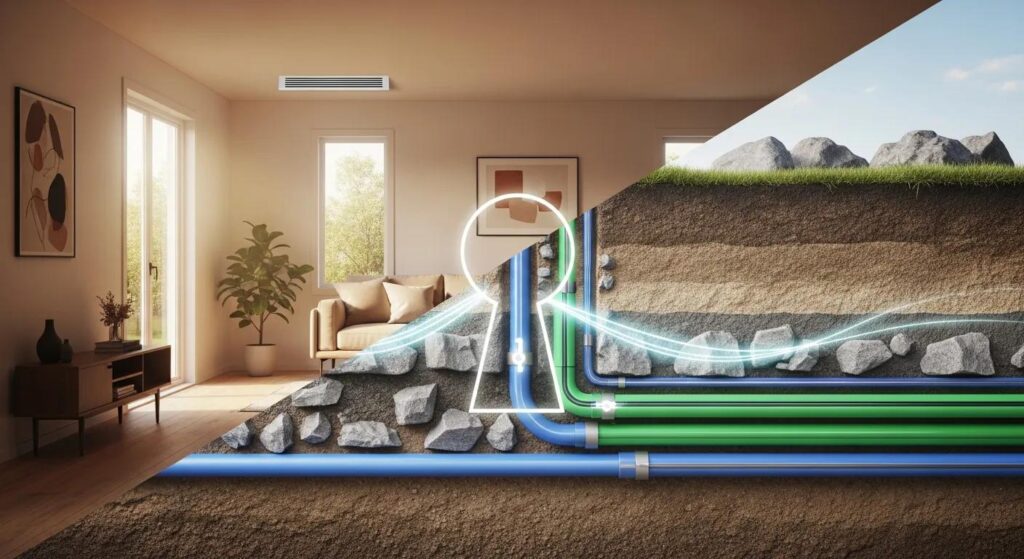
Geothermal HVAC Systems Commercial: Why Thermal Energy Networks Outperform Traditional HVAC in Commercial Buildings
Commercial buildings are increasingly adopting geothermal HVAC systems and thermal energy networks to meet sustainability and operational efficiency objectives. These systems use renewable thermal sources to deliver heating and cooling with reduced operating costs and lower environmental impact. The following content examines the principal benefits of thermal energy networks, their role in improving energy efficiency, and their sustainability advantages relative to conventional HVAC. It also evaluates cost‑saving mechanisms associated with geothermal systems and outlines key design considerations for commercial implementation.
What Are the Key Benefits of Thermal Energy Networks for Commercial Buildings?
Thermal energy networks deliver measurable operational and environmental benefits for commercial properties. The principal advantages include:
- Greater Renewable Energy Efficiency: Thermal energy networks utilize renewable sources, leading to improved energy efficiency compared to traditional systems.
- Reduced Carbon Emissions: By relying on geothermal energy, these systems significantly lower greenhouse gas emissions, contributing to a more sustainable future.
- Lower Operating Costs: The efficiency of thermal energy networks translates into reduced energy bills, making them economically attractive for businesses.
These outcomes explain the increasing migration of commercial facilities to thermal energy networks, supporting both cost reduction and emissions targets.
How Do Thermal Energy Networks Enhance Commercial Building Energy Efficiency?
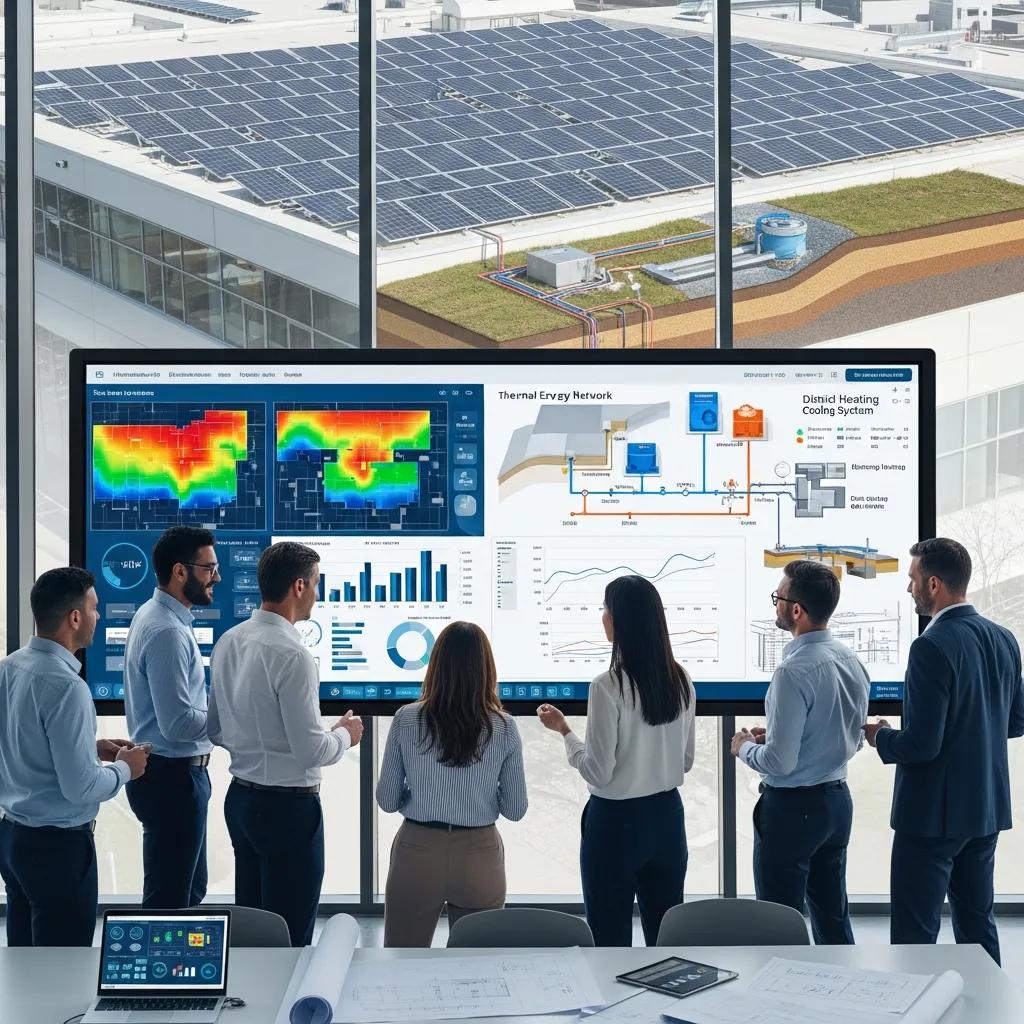
Thermal energy networks increase building energy efficiency by integrating renewable thermal sources with optimized load management and control systems. They operate at higher seasonal and part‑load efficiencies than combustion‑based HVAC, reducing energy losses associated with fuel conversion.
These networks can be integrated with additional renewables, such as solar PV or solar thermal, to further decrease grid dependence and lower total energy expenditure. The combined approach reduces peak electrical demand and improves overall system economics for energy‑focused organisations.
What Sustainability Advantages Do Thermal Energy Networks Provide Compared to Traditional HVAC?
Thermal energy networks offer significant sustainability advantages by lowering lifecycle carbon emissions through primary reliance on renewable thermal sources. This reduction supports organizational decarbonization commitments and regulatory compliance.
They are inherently scalable, enabling incremental capacity additions as building portfolios expand. In district or urban contexts, networked buildings can share resources to maximise utilisation and minimize per‑unit emissions.
Compatibility with multiple renewable inputs enhances resilience and sustainability. Investment in thermal networks yields durable operational savings while materially reducing a building’s environmental footprint.
How Do Geothermal HVAC Systems Deliver Cost Savings Over Traditional HVAC Solutions?

Geothermal HVAC systems generate quantifiable cost savings via several mechanisms. They can deliver 3-5 times greater renewable energy efficiency, lowering energy consumption for heating and cooling by leveraging the earth’s stable subsurface temperatures.
Many geothermal installations qualify for tax incentives and rebates, which reduce net capital expenditure and improve project return on investment. These financial incentives materially affect payback calculations for commercial owners.
Operational economies also arise from reduced maintenance requirements versus conventional equipment. The combined effects of efficiency gains, fiscal incentives, and lower lifecycle maintenance costs make geothermal systems an economically compelling option for businesses focused on total cost of ownership.
What Are the Installation and Operational Cost Differences Between Geothermal and Traditional HVAC?
Comparing geothermal and traditional HVAC requires assessment of both upfront and lifecycle costs. Geothermal systems typically entail higher initial capital due to ground loops and specialised plant. However, this capital premium is frequently offset by long‑term savings from lower energy consumption and reduced maintenance.
Operational expenditures for geothermal systems are generally lower because they exploit stable ground temperatures rather than volatile fuel markets. Traditional systems that depend on fossil fuels are subject to price fluctuation, which increases operating cost risk.
Installation challenges—site surveys, drilling and permitting—can increase early project complexity. When evaluated on total cost of ownership, however, geothermal solutions commonly deliver superior lifecycle economics for commercial deployments.
How Does Geothermal Heating Reduce Energy Expenses in Commercial Settings?
Geothermal heating reduces energy expenses by providing a stable, high‑efficiency thermal source that mitigates exposure to fluctuating fuel prices. Predictable thermal supply enables more accurate budgeting of heating and cooling costs.
Facilities can repurpose surplus heat for secondary processes, such as domestic hot water or adjacent space heating, improving overall system utilisation and creating additional operational savings.
Participation in local energy programmes and incentive schemes can further reduce net costs. By leveraging available programmes, commercial operators can optimise project economics while advancing sustainability objectives.
What Are the Design and Implementation Considerations for Thermal Energy Networks in Commercial Buildings?
Design and implementation require rigorous evaluation of system capacity, compatibility with existing infrastructure, and provisions for future scalability. These factors determine long‑term performance and return on investment.
A comprehensive feasibility study is essential to quantify building energy demand profiles and establish the optimal system configuration. The study should also assess opportunities to integrate complementary renewables, such as solar or wind, to improve the network’s efficiency.
Adopting modular design principles facilitates phased deployment and future expansion, enabling organisations to align capital expenditure with growth while maintaining operational continuity.
Which System Types and Configurations Optimize Thermal Energy Network Performance?
Performance optimisation depends on selecting the appropriate system architecture. Geothermal networks, utilising stable ground temperatures, are highly efficient and can be configured as closed‑loop or open‑loop systems based on site hydrogeology and demand profiles.
Waste‑heat recovery networks capture process heat from industrial sources to supply nearby heating loads, improving overall system efficiency. Hybrid configurations that pair geothermal with solar thermal or other renewables increase reliability and performance.
Careful selection of system type and configuration is critical to maximise efficiency and align technical design with commercial objectives and site constraints.
What Challenges Arise During Installation and How Are They Addressed?
Typical installation challenges include securing project financing, ensuring workforce competence, and establishing standardised installation processes. Initial capital requirements can exceed those of conventional systems, necessitating robust financial planning.
Workforce readiness is addressed through targeted training programmes and partnerships with educational institutions to develop necessary technical skills for installation and maintenance of geothermal infrastructure.
Standardising procedures and project delivery reduces variability, shortens schedules, and improves quality control. Proactively managing these challenges increases the likelihood of successful project outcomes.
How Do Thermal Energy Networks Improve System Resilience Compared to Traditional HVAC?
Thermal energy networks improve resilience by providing on‑site thermal reserves and diversified supply sources. Stored thermal capacity allows continued operation during supply disruptions or peak demand events.
Integration of multiple energy inputs, such as geothermal and solar, enhances redundancy and reduces outage risk, supporting consistent indoor environmental conditions under variable external conditions.
These networks also support adaptive load management and integration with smart grid technologies, strengthening operational resilience and enabling proactive demand response strategies.
What Metrics Demonstrate Increased Resilience in Commercial Thermal Energy Networks?
Key resilience metrics include available on‑site thermal reserve capacity, energy cost volatility, and system recovery time following supply interruptions. These indicators quantify the network’s ability to sustain operations.
On‑site thermal reserves permit continued heating and cooling through peak periods, reducing dependency on external supply. Energy cost stability derives from reliance on renewable sources, which dampens exposure to fossil fuel price swings.
System responsiveness to disruptions—measured by downtime and recovery performance—provides an objective assessment of resilience. Robust thermal networks maintain continuity and protect business operations during adverse events.
How Do Thermal Energy Networks Support Sustainable HVAC Solutions Commercially?
Thermal energy networks support sustainable HVAC strategies by substantially reducing operational emissions and enhancing asset value. Deploying renewable thermal infrastructure aligns with corporate sustainability targets and regulatory expectations.
Buildings equipped with advanced thermal systems frequently command higher tenant and investor interest due to lower operating costs and demonstrable environmental performance, improving market competitiveness.
Monetisation opportunities—such as selling surplus heat or participating in local energy programmes—can create additional revenue streams. Adopting thermal networks positions commercial properties for long‑term value and regulatory resilience.
What Are the Latest Market Trends and Case Studies Demonstrating Thermal Energy Network Success?
Market indicators show increasing adoption of thermal energy networks driven by technology improvements and stronger sustainability mandates. Case studies across sectors document measurable reductions in energy expenditure and emissions.
For example, a metropolitan project that integrated geothermal heating into a district energy system reported a 30-50% reduction in energy costs for participating buildings, demonstrating the potential scale of savings.
As organisational demand for low‑carbon solutions grows, the market will continue to evolve with new configurations and technologies to address diverse commercial energy requirements.
Which Commercial Projects Showcase Quantified Energy and Cost Savings?
Multiple commercial implementations have produced documented savings. One large office complex that installed a geothermal HVAC system reported a 40% reduction in annual energy expenses, illustrating significant operational impact.
A mixed‑use development that adopted a thermal energy network also achieved substantial reductions in both energy use and carbon emissions, reinforcing the financial and environmental case for networked solutions.
These case studies provide practical benchmarks that organisations can use to evaluate potential savings from geothermal HVAC adoption.
What 2026 Statistics Highlight the Growing Adoption of Geothermal HVAC Systems?
As of 2026, industry data indicate rising deployment of geothermal HVAC technology across commercial sectors. Surveys report roughly 25-30% of new commercial buildings incorporating geothermal solutions, reflecting a material uptake.
Installation costs for geothermal systems have declined by nearly 15% over the previous five years, improving affordability and strengthening the business case for wider adoption.
These statistics reinforce the recognition of geothermal HVAC as a viable, cost‑effective option for commercial buildings seeking sustainable, long‑term energy solutions.
How Can Commercial Renewable Energy Contractors Leverage Consulting Services to Implement Thermal Energy Networks?
Commercial contractors can leverage specialised consulting to support feasibility analysis, regulatory compliance, and operational handover. Consultants provide structured assessments that reduce technical and commercial risk.
Feasibility studies enable contractors to quantify client energy requirements and determine optimal system sizing and configuration. Consultants also assist with permitting and regulatory navigation to streamline project approvals.
Operational support—from design review to commissioning and maintenance planning—improves project delivery and lifecycle performance. Partnering with experienced consulting firms increases the probability of successful thermal network deployments.
What Strategic Guidance Does Pro Profit Build Offer for Geothermal HVAC Projects?
Pro Profit Build provides strategic advisory for geothermal HVAC projects, including diagnostic profit audits, process reengineering, and operational leadership programmes. Their consultancy targets measurable performance improvements for renewable infrastructure projects.
Through diagnostic profit audits, Pro Profit Build identifies operational inefficiencies and prescribes targeted strategies to enhance energy performance and reduce costs. Their process overhauls align organisational workflows with technical best practices for geothermal deployment.
Pro Profit Build’s operational leadership programmes deliver staff training and governance frameworks to ensure reliable operation and maintenance of geothermal systems, supporting sustained project outcomes.
How Can Booking a Strategy Session Accelerate Project Success?
Booking a strategy session with Pro Profit Build accelerates project timelines by identifying growth opportunities and producing tailored roadmaps that address technical and commercial challenges. These sessions deliver focused guidance grounded in industry experience.
During a strategy session, stakeholders review energy requirements and receive customised recommendations for thermal network design and implementation. The targeted feedback enhances decision‑making and reduces implementation risk.
Insights from these engagements can improve profitability and operational efficiency, positioning organisations to succeed in competitive renewable energy markets. Strategic consulting therefore contributes directly to project viability and long‑term performance.
To further explore how thermal energy networks can benefit your commercial building, review the design and implementation considerations outlined above.
For those seeking to optimise their geothermal HVAC projects, Pro Profit Build’s services provide tailored strategies to improve energy efficiency and reduce lifecycle costs.
Moreover, leadership capabilities within your organisation can be strengthened through specialised programmes that support effective operation and maintenance of geothermal assets.
For additional information and project resources, Pro Profit Build’s resources offer practical guidance on renewable energy and infrastructure implementation.
Consider booking a strategy session to identify growth opportunities and develop a bespoke roadmap for your project challenges.